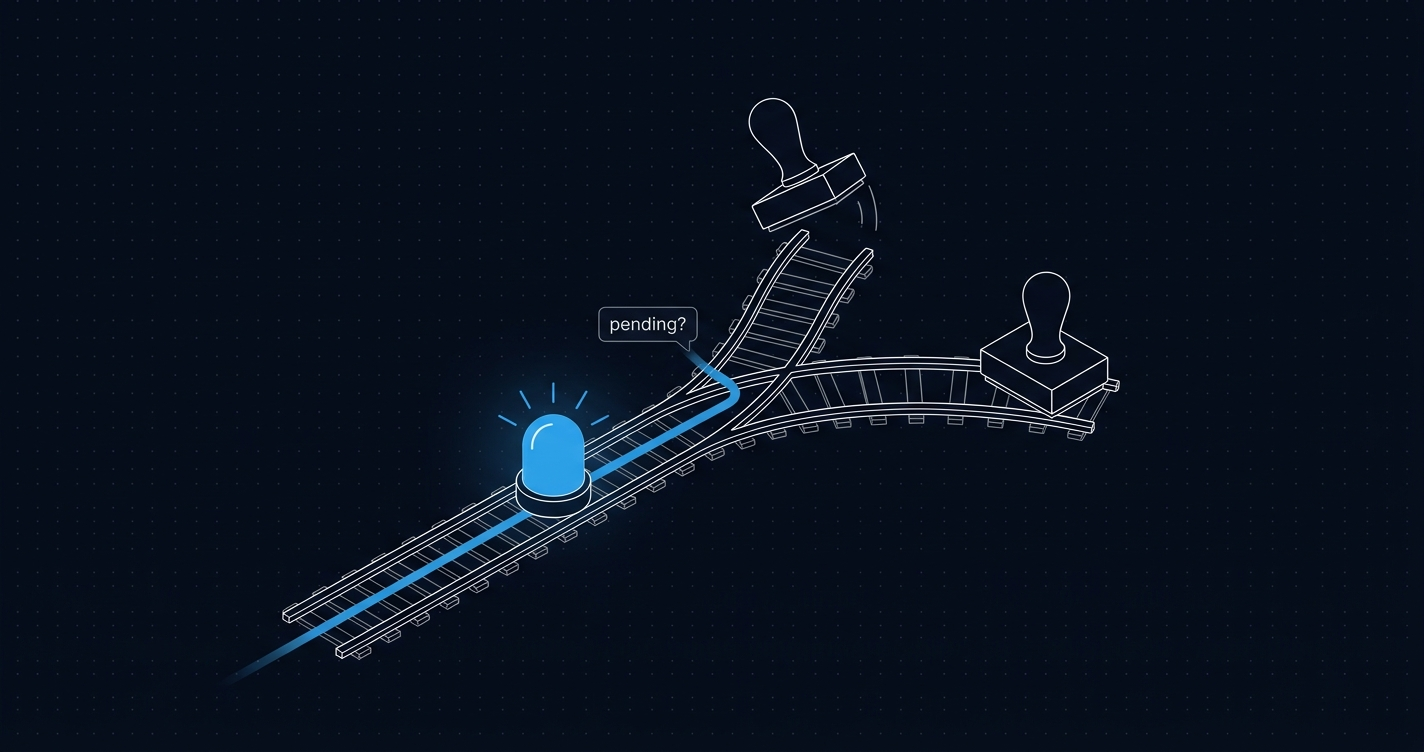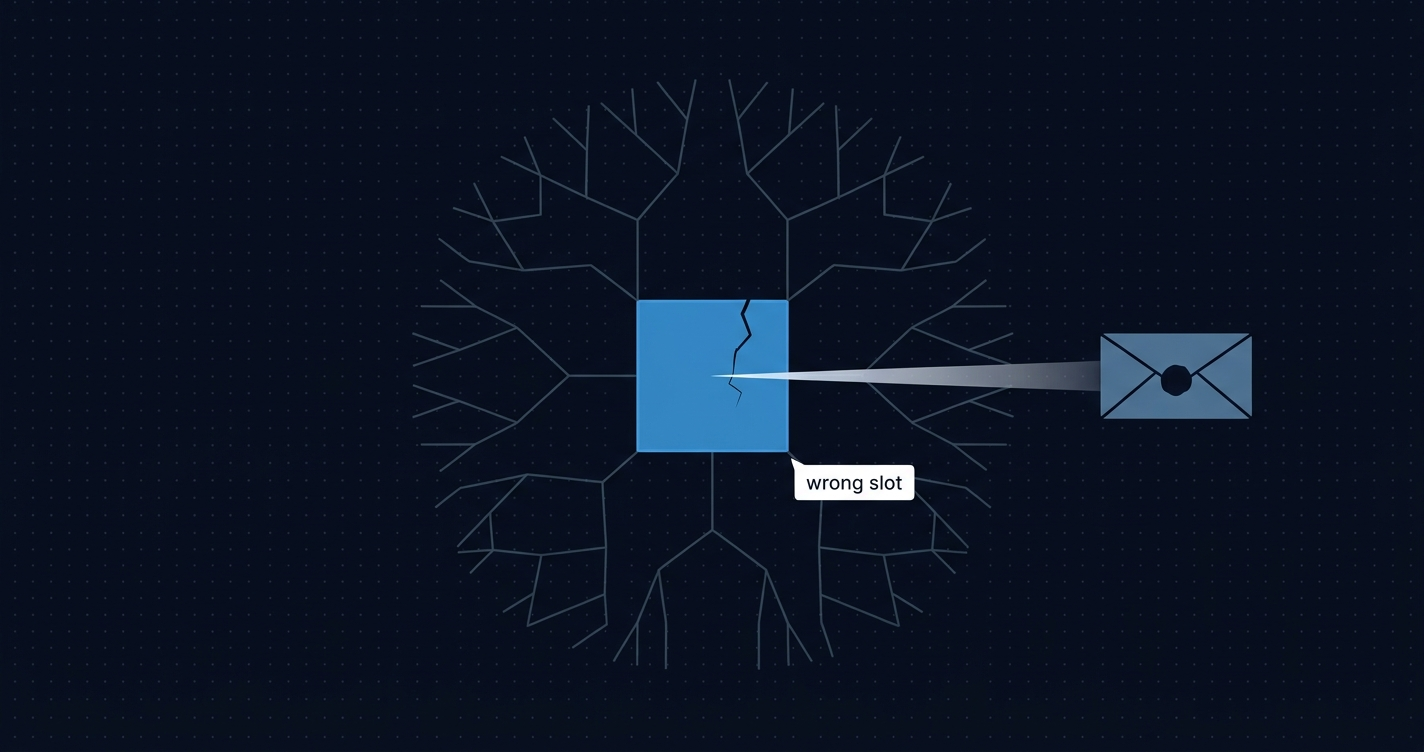
You shipped your rollup. Blocks are producing, the sequencer is humming, and your first users are bridging tokens over. Then someone reports a failed transaction. Where do you look?
If the answer is “grep the sequencer logs,” you have a problem.
A quick L2 primer
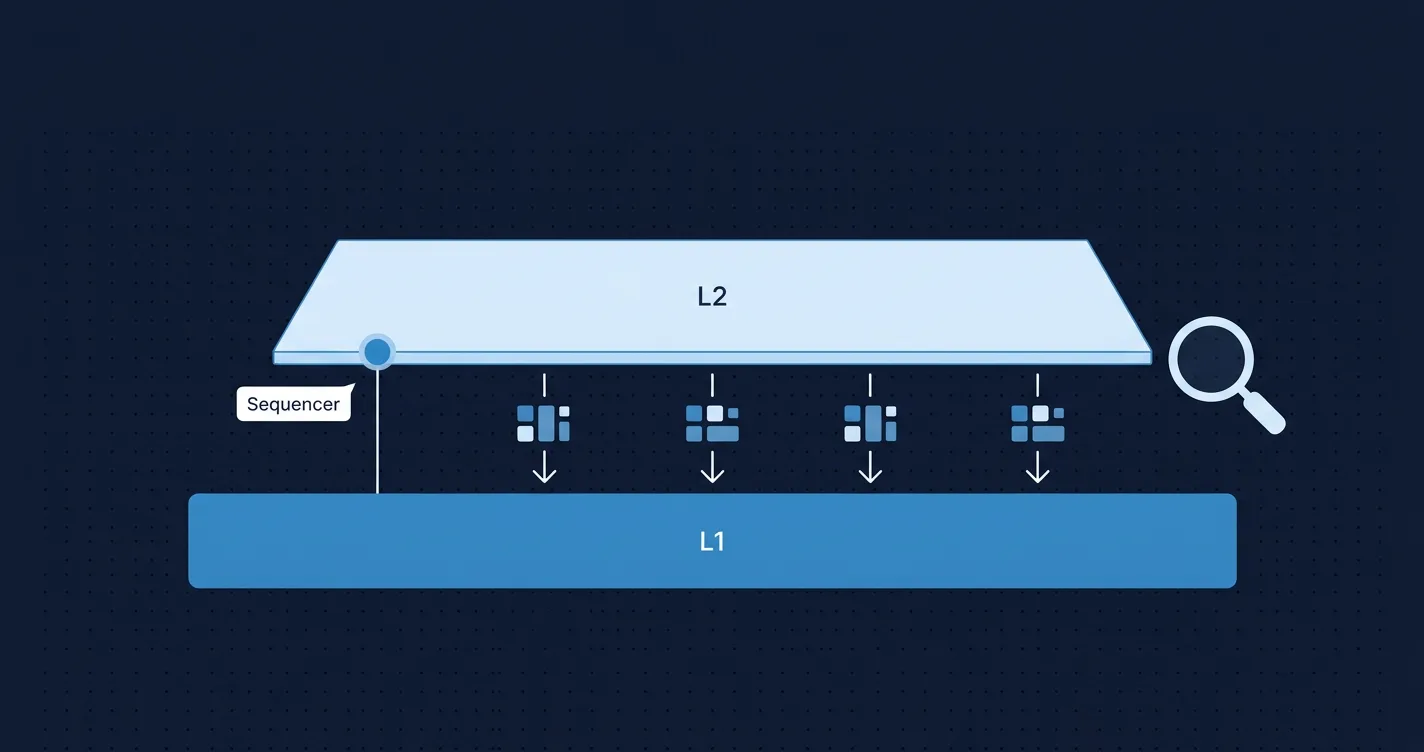
If you’re building on Ethereum today, you’re almost certainly building a Layer 2. L1 handles consensus and data availability. Your L2 handles execution, running transactions cheaply and posting results back to L1 for finality.
Ethereum L1 does about 15 transactions per second1. Rollups push that into the thousands by moving execution off-chain while inheriting Ethereum’s security.
Two main architectures:
- Optimistic rollups (Arbitrum Orbit, OP Stack) execute off-chain and post transaction data to L1. Transactions are assumed valid unless someone submits a fraud proof during a 7-day dispute window2.
- ZK rollups (zkSync, Scroll, Polygon zkEVM) generate a cryptographic validity proof per batch. No dispute window, but proof generation is computationally expensive. Vitalik Buterin wrote in 2021 that ZK rollups will likely win long-term as proving gets faster3. That prediction is looking pretty accurate.
Both depend on a sequencer, the node that orders and batches transactions before posting them to L1. Most rollups run a centralized sequencer today. Shared sequencing is on the roadmap for most of them4.
Your chain ends up with its own block space, gas market, and transaction history. That history needs to be readable.
The infrastructure gap
Most teams launching a rollup focus on sequencer reliability, bridge security, DA costs. The block explorer gets pushed to “before public launch.”
This is backwards. L2Beat tracks over 100 rollups in production5, and the ones that gain traction tend to ship observability alongside infrastructure, not after.
A block explorer is observability infrastructure. You need it from day one.
Five reasons your rollup needs a block explorer
1. Debugging failed transactions
When a transaction reverts, your users see a generic error. A block explorer shows the decoded function call, the revert reason, the internal calls that fired before the failure, and the state changes.
Without that, you’re debugging blind. Users paste error hashes in Discord. Your team scrubs raw RPC responses. Nobody is having a good time.
Tracing matters even more on L2s. A deposit from L1 triggers a message relay on L2, which calls a token bridge, which mints tokens, which fires a callback. When step three fails, a wallet shows “transaction failed.” A trace shows you the exact internal call that reverted and why.
2. User trust
Bridging tokens from L1 to L2 is a trust exercise. Users send funds to a contract and wait. Optimistic rollups add a 7-day withdrawal delay on top. If users can’t look up their deposit on the other side, they assume it failed and flood your support channels.
A block explorer gives them a self-service answer: search by address, check the balance, confirm the transaction. Arbitrum’s public explorer handles millions of lookups daily for this reason6. It’s the difference between “where are my tokens?” support tickets and users who can answer the question themselves.
3. Token tracking
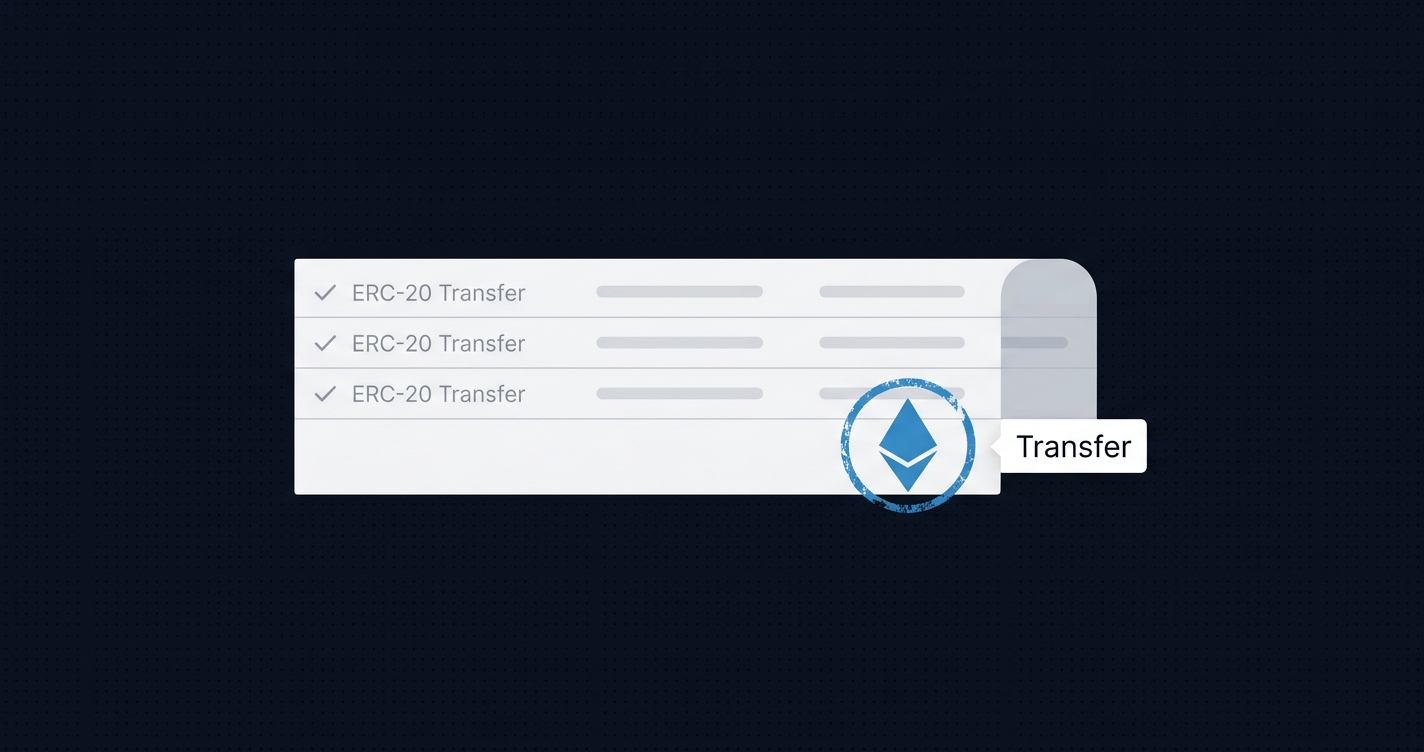
Any DeFi activity on your chain (a DEX, lending, NFT marketplace) means you need token transfer visibility. ERC-20, ERC-721, and ERC-1155 transfers should be detected, decoded, and displayed with metadata: token name, symbol, decimals, images.
Without it, nobody can verify transfers at a glance. Projects building on your chain can’t debug their own contracts. You’re flying blind on token activity.
4. Contract verification
Verified source code is the minimum for any chain people actually use. Trail of Bits has written extensively about how unverified contracts are a red flag for both users and auditors7. Developers deploying on your rollup need somewhere to publish source so users can read what they’re interacting with.
The usability angle matters just as much. A verified contract on a block explorer gets an auto-generated UI for every function. Users can call balanceOf or approve from their browser. No code, no ABI wrangling.
5. Chain health monitoring
Block production rate, gas usage, active addresses, throughput. If block times drift or gas spikes, you want to see it in a dashboard before your users see it on Twitter.
For L2s, you also need visibility into the L1 relationship: batch submissions, deposit/withdrawal status, bridge contract activity. If your sequencer stops posting batches, you need to know first.
The Optimism team learned this during their June 2023 Bedrock incident, when a bug caused a brief chain halt8. Teams with monitoring caught it in seconds. Others found out from crypto Twitter.
What to look for in an L2 explorer
Etherscan was built for L1 and works best there. If you’re running your own rollup, you need something that understands L2 concepts:
| Capability | Why it matters |
|---|---|
| Bridge visibility | Track deposits, withdrawals, pending status, finalization |
| Batch monitoring | See which L2 blocks have been posted to L1 |
| Custom chain support | Connect via RPC, no forking or custom indexer |
| Contract verification | UI, CLI, and API (for CI/CD) |
| Self-hosted option | Run it on your own infra when compliance requires it |
| White-label branding | Your logo, colors, domain, token symbol |
How Ethernal fits
We built Ethernal as an open-source block explorer for EVM chains, with first-class support for Arbitrum Orbit and OP Stack.
Setup: point it at your RPC endpoint. It starts indexing blocks, transactions, and contracts. No subgraph, no custom indexer.
What’s included:
- Transaction tracing with decoded internal calls, state diffs, balance changes
- Automatic ERC-20, ERC-721, and ERC-1155 detection
- Contract verification (UI, CLI, API)
- L2 bridge tracking: deposits, withdrawals, batch submissions
- White-label branding
- REST API for integrating chain data into your tools
Cloud-hosted plans start at free for unlimited transactions. Or self-host under MIT license. Either way, RPC to working explorer in under 5 minutes.
Get started
If you’re running an EVM chain without a block explorer, or using a generic tool that doesn’t understand your L2, try Ethernal. Connect your RPC and see what your chain actually looks like.
Your users are already wondering. Give them somewhere to look.
References
1. Ethereum Foundation. “Ethereum Scalability.” ethereum.org, 2024. https://ethereum.org/developers/docs/scaling/
2. Ethereum Foundation. “Optimistic Rollups.” ethereum.org, 2024. https://ethereum.org/developers/docs/scaling/optimistic-rollups/
3. Buterin, V. “An Incomplete Guide to Rollups.” vitalik.eth.limo, 2021. https://vitalik.eth.limo/general/2021/01/05/rollup.html
4. Espresso Systems. “Shared Sequencing: The Future of Rollup Interoperability.” espressosys.com, 2024. https://www.espressosys.com/blog/espresso-sequencer-the-shared-sequencer
5. L2Beat Contributors. “Layer 2 Scaling Solutions.” l2beat.com, 2024. https://l2beat.com/scaling/summary
6. Arbiscan Contributors. “Arbitrum Block Explorer.” arbiscan.io, 2024. https://arbiscan.io/
7. Trail of Bits. “Building Secure Smart Contracts.” blog.trailofbits.com, 2023. https://blog.trailofbits.com/category/blockchain/
8. Optimism Collective. “Bedrock Postmortem.” community.optimism.io, 2023. https://community.optimism.io/